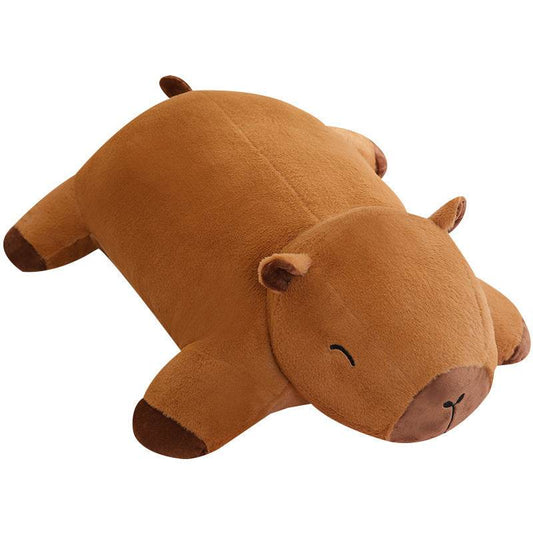
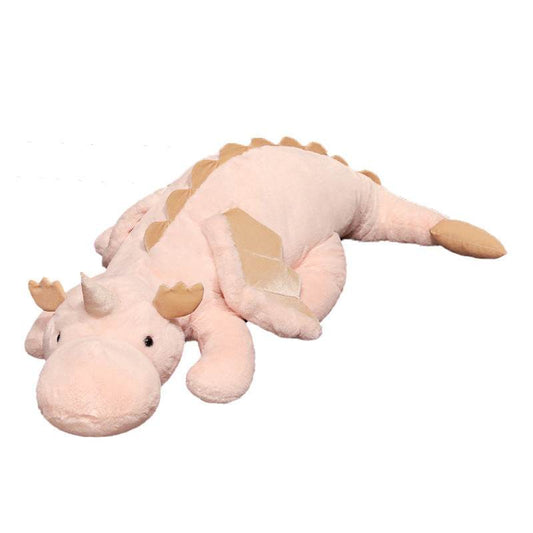
Can You Bring a Stuffed Animal on a Plane? (Even Giant Ones)


Window Seat for the Bear, Please
The real rules for flying with plushies — from pocket-sized to a giant teddy bear with its own seat. giant teddy bear buckled into an airplane seat by a window, golden-hour light.
Flying with your plushie: can you bring a giant teddy bear on a plane?
Somewhere right now, a person is standing at a departure gate holding a teddy bear the size of a labrador, wondering if they've made a terrible mistake. (They haven't — we've shipped enough surprise bears to know how many of them eventually fly home in economy.) Whether you're a kid-parent, an adult who doesn't sleep well without the capybara — welcome, you're among friends — or someone hand-delivering a long-distance grand gesture, here are the actual rules, minus the forum guesswork.
Quick answer: Yes — stuffed animals are fully allowed on planes, in both carry-on and checked bags, with no security restriction on size or quantity. The practical limit is your airline's carry-on allowance: a plushie carried on counts toward your bag allowance if it doesn't fit inside one. Small-to-medium plushies fly free in your bag; a giant teddy bear either travels checked, partially compressed in a carry-on, or — genuinely — in its own purchased seat on some airlines.
The security part (the easy bit)
Security screening — TSA in the US, and equivalent agencies elsewhere — has no rule against stuffed animals. They go through the X-ray on the belt like a jacket, any size, any number, in carry-on or checked luggage. Officers see thousands of them daily; nobody blinks.
Three honest footnotes: a very dense or oversized plushie may get a secondary look or swab, purely because thick stuffing screens as an opaque blob — it takes an extra minute, it's routine, don't sweat it. Electronic plushies (sound boxes, batteries) are also fine, though anything with a lithium battery belongs in carry-on rather than checked, per standard battery rules. And for kids: prep them that the bear rides the conveyor alone for a moment. That ten seconds of separation is the actual hardest part of flying with a plushie, and knowing it's coming prevents a gate-adjacent meltdown. Ask the officer if your child can watch it emerge — they nearly always oblige.
The real question: carry-on math

Security says yes; your airline's baggage policy is where the negotiation happens. The rules that matter:
If it fits inside your carry-on or personal item, it doesn't exist as far as the airline cares. This covers everything up to roughly 40cm / 16in with smart packing (compression tricks below).
Carried separately, a plushie generally counts as one of your allowed items. Most airlines allow one carry-on plus one personal item; a bear hugged through the gate typically occupies one of those slots. Kids' comfort objects usually get warm-hearted leniency — a toddler's clutched bunny is never counted in practice — but an adult carrying a 90cm panda should assume it's using the personal-item slot.
Giants (100cm+ / 3.3ft+) have three legitimate paths:
- Check it. Inside a large duffel or a sturdy garbage-bag-lined box, partially compressed. Cheapest, mild fluff-recovery needed on arrival (here's the revival routine).
- Gate-check it. Carry it through the airport (excellent content, be warned), and if it won't fit overhead, crews will usually gate-check it free like a stroller. Airline-dependent; ask at the desk with a smile.
- Buy it a seat. Not a joke: several airlines let you purchase an extra seat for a large item (the booking category is usually "cargo in cabin" or "extra seat — comfort"). People do this for cellos, wedding dresses, and yes, bears. If the bear IS the trip — a proposal, a reunion — a seat guarantees it arrives unsquished and generates the best photo of the flight. Call the airline to book it; it can't always be done online.
Our 2 cents: for anything over 120cm, honestly compare one more option — shipping it ahead. A checked-bag fee often costs as much as ground shipping, and the bear arriving at the destination before you means you're not wrestling it through two airports. (It's also, not coincidentally, why we ship gift bears directly to recipients in 30+ countries — sometimes the best travel plan for a bear is skipping the airport entirely.)
Packing a plushie without ruining it

Plushies are the most forgiving thing you'll ever pack — fill compresses and recovers — but two rules protect them:
Compress gently, briefly. Rolling a plushie tight and wedging it into a packed case for a day is completely fine; PP cotton bounces back with a shake and a squeeze. What it won't forgive is a week vacuum-sealed flat — same physics as long-term storage compression. A large ziplock with the air pressed (not vacuumed) out is the sweet spot: 30% smaller, zero damage, and it keeps the plushie clean if your bag gets rained on at a gate.
Protect the face. Ears, snouts, and embroidered features press against hard objects badly. Pack the plushie face-up against soft clothes, never under the toiletry bag. On arrival: shake, squeeze, ten minutes propped upright, and any pressed fur responds to a quick brush.
For the emotional-support traveler specifically: keep the plushie in your personal item, not the checked bag. Checked luggage goes missing exactly often enough that your sleep companion shouldn't gamble on it — and a familiar soft object in a hotel room is half the cure for can't-sleep-in-new-places syndrome. A lap-sized plushie (25–45cm travels beautifully) is the frequent flyer's spec.
Country-hopping footnote
Plushies raise zero customs issues for personal travel — they're not restricted goods anywhere we ship. The one nuance: brand-new plushies in original packaging in large quantities can look commercial to customs; a gift or two is nothing, a suitcase of twenty sealed identical bears might get a question. Traveling with your obviously-loved companion: universally fine.
FAQs
Can you bring a stuffed animal through TSA security?
Yes — stuffed animals of any size are allowed through security in carry-on and checked bags, with no quantity limit. They go through the X-ray on the belt; very dense ones occasionally get a routine secondary check that takes a minute.
Does a giant teddy bear count as a carry-on?
If it can't fit inside your bag, a giant teddy bear carried separately generally counts as your carry-on or personal item. If it won't fit in the overhead bin, staff will usually gate-check it; the guaranteed options are checking it in a duffel or buying it its own seat.
Can you actually buy a plane seat for a teddy bear?
On several airlines, yes — the same "extra seat" booking used for musical instruments. It must usually be arranged by phone, the item gets belted in (often in a window seat, away from the aisle), and it's the only method that guarantees zero squishing.
How do I pack a stuffed animal in a suitcase without damaging it?
Roll it gently, press (don't vacuum) the air out in a large ziplock, and pack it face-up against soft clothing. On arrival, shake and squeeze it back to shape — brief compression is harmless to quality fill; only prolonged vacuum-sealing causes lasting flattening.
Can my child bring their stuffed animal on the plane for free?
In practice, virtually always — a child's clutched comfort object is treated with universal leniency and isn't counted against bag allowances. Prepare them for the ten seconds it rides the X-ray belt alone, and consider a backup identical lovey for exactly this trip.
Is it weird for an adult to travel with a plushie?
Not even slightly — flight crews see it constantly, and around 40% of adults sleep with a comfort object. A familiar plushie is one of the most effective cures for hotel-room insomnia; frequent flyers pack lap-sized ones on purpose.
Cleared for takeoff
Small plushie: in the bag, done. Big plushie: check it, gate-check it, or give it the window seat it deserves. Either way, the bear flies — and if you'd rather the bear simply appear at the destination without airport logistics, well, that's literally our job.